
/ Doctorate/PhD
Call: African Studies Intellectual Apprenticeship Network (ASIAN)
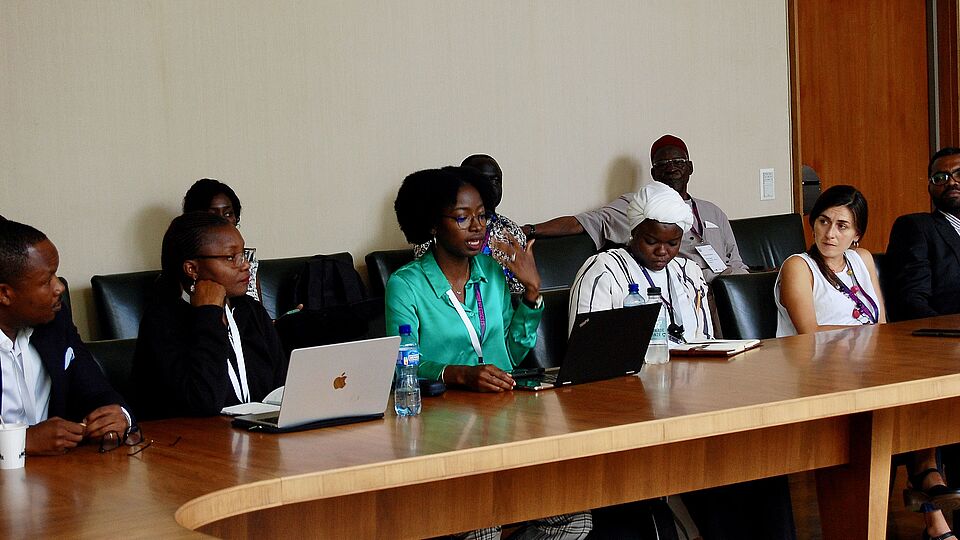
A PhD is not proof that one knows something. It is evidence that one has begun to learn how to ask questions responsibly. The African Studies Intellectual Apprenticeship Network is an invitation to continue that journey: A twelve-month mentoring program for doctoral students and early-career researchers who wish to develop not only as researchers, but also as scholars.
While many doctoral candidates receive excellent training in research methods and disciplinary knowledge, few are offered a sustained opportunity to reflect on what kind of intellectuals they wish to become and what contribution they hope to make to the advancement of knowledge. The African Studies Intellectual Apprenticeship Network is a twelve-month mentoring program designed for doctoral students and early-career researchers who wish to develop not only as researchers, but also as scholars.
The program is not intended to replace doctoral supervision. Nor is it conceived as a technical training course in research methods. Rather, it seeks to create a community of intellectual apprenticeship in which participants can explore fundamental questions about knowledge, concepts, theory, explanation, critique and scholarly responsibility. Its underlying premise is that studying Africa is not only a way of understanding Africa. It is also a way of improving the concepts, methods and theories through which we understand (global) society more generally.
The program is particularly suited to doctoral students and early-career scholars working in African Studies, sociology, anthropology, political science, history, development studies and related fields (such as the humanities). Participants need not share the same theoretical perspectives or methodological preferences. What matters is intellectual curiosity, a willingness to engage critically with one's own assumptions, and a commitment to scholarship as a serious intellectual vocation.
The network is organized around a central intellectual movement: the transition from project-based identity to agenda-based identity. Many doctoral students experience research primarily as the completion of a dissertation. The program encourages participants to think beyond the dissertation and to identify the enduring problems, questions and commitments that may guide their intellectual work over the course of a lifetime.
Over twelve months, participants will engage with a series of themes that form part of an integrated reflection on scholarship and knowledge production:
- how research objects are constituted;
- the role of concepts and categories in making the world intelligible;
- theory as a disciplined attempt to make facts intelligible;
- explanation as the reconstruction of mechanisms, conditions and outcomes;
- critique as a form of intellectual responsibility;
- argument, justification and the defensibility of knowledge claims;
- the relationship between African Studies and the social sciences more broadly;
- the development of a personal intellectual agenda.
- The programme combines four complementary activities.
First, participants will take part in a series of online intellectual workshops held approximately every two months. These workshops will focus on core themes and conceptual tools and will combine short presentations, discussion and practical exercises.
Second, participants will join regular research clinics in which they present not completed papers or polished results, but rather intellectual problems, conceptual difficulties, theoretical puzzles and analytical challenges arising from their work. The emphasis will be on collective reflection and intellectual development rather than evaluation.
Third, participants will have opportunities to receive feedback on selected pieces of writing, including dissertation chapters, articles, research proposals and conceptual essays. Feedback will focus primarily on conceptual clarity, argumentation, explanation and scholarly positioning rather than technical supervision.
Fourth, participants will be invited to develop a personal intellectual manifesto. At the beginning of the program, each participant will formulate a short statement outlining the problems, concepts and commitments that animate their work. This manifesto will be revisited and revised throughout the year as a way of documenting intellectual growth and scholarly self-understanding.
The program is guided by a broader vision of scholarship. Knowledge is not understood merely as the accumulation of information, but as the disciplined effort to understand the world better. Participants will therefore be encouraged to cultivate habits of intellectual responsibility, conceptual precision, theoretical imagination and methodological reflexivity. Particular emphasis will be placed on the idea that scholarly work should be capable of contributing not only to specialized debates, but also to our broader understanding of society and the human condition.
At the end of the program, participants should have gained more than a clearer research project. They should have developed a stronger sense of intellectual purpose, a more coherent scholarly identity and a deeper appreciation of the responsibilities and possibilities that accompany the production of knowledge.
Applications
Applicants are invited to submit:
- a brief curriculum vitae;
- a one-page statement describing the research project;
- a one-page reflection addressing the following questions:
- what problem troubles me most?
- why does it matter?
- what concept do I rely on most in my work? what do I think I already know?
Applications should be sent by email to:
elisio.macamo@clutterunibas.ch
Deadline: 15th July 2026
Selected participants will be notified after review of the applications.