Curated Escapes and Derelict Landscapes in Times of Climate Change

The Project

From private islands in the Pacific to luxury bunkers in the Alps to eco-estates bordering national parks in southern Africa, land is being transformed into ‘curated escapes’ for the wealthy to flee the social and ecological effects of climate change. Simultaneously, ordinarily people face disastrous effects of climate change, having to re-imagine their own escapes from (or even to) such landscapes deemed ‘derelict’ and incapable of sustaining life and livelihoods. Declarations of dereliction can be as powerful as truly degraded lands, leading to forced displacement and dispossession.

This project investigates how—amidst socio-economic inequalities—climate change is transforming land tenure and the relationship of ordinary people and elites to the land. By considering diverse case studies (Namibia, South Africa, Switzerland, Sierra Leone, Mauritius, the Chagos Archipelago, Tuvalu, and Antarctica), this project looks at how rhetorics and realities of land degradation and human displacement often go hand-in-hand with elite capture of sometimes the very same lands. The CEDEL team looks into these questions from the past to the present, showing that these contemporary challenges are rooted in historical processes.

The CEDEL team looks into (1) historically-developed ‘escapes’, such as private nature conservation and eco-estates in southern Africa. These dynamics of escape and dereliction have been ongoing for decades and relate to current debates of land tenure and equity. We also examine (2) contemporary dilemmas of dereliction and escape, often related to debates around ‘sinking’ islands and melting permafrost and how to make use of lands (and waters) which are facing imminent ecological changes. From the coasts of Sierra Leone and the Indian Ocean to the Swiss Alps, these questions are pertinent for local populations and global debates concerning (un)inhabitability. Finally, the team considers (3) future visions of escape, rooted in eco-fiction (cli-fi) but with real-world proponents. From proposals to build digital clones of the nation of Tuvalu to escapes into outer space, the CEDEL team examines how communities engage in future-making from the past to the present.

SNSF Starting Grant (01.09.2025 – 31.08.2030)


Subprojects

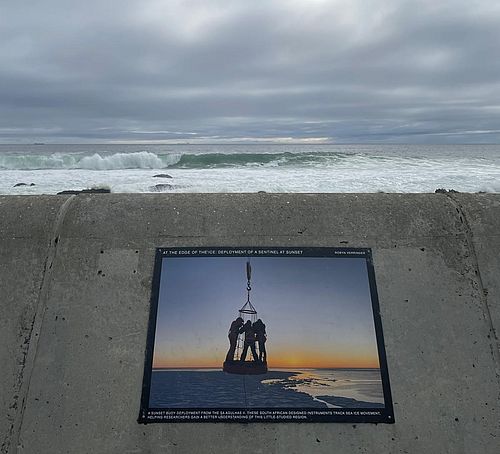
Antarctica Exhibition at the Sea Point Promenade in Cape Town
Lead: Luregn Lenggenhager

From Desert Lodges to Ice Pods: South Africa’s Role in Antarctic Tourism

This project traces the unexpected connections between Southern Africa’s landscapes of elite nature conservation and the emerging world of land-based deep field Antarctic tourism. South Africa has become a logistical and conceptual gateway to Antarctica, where the model of exclusive wilderness travel is carried from desert lodges and private reserves to the icy interiors of the far south. From Cape Town, tourists, researchers and workers fly to Antarctic runways, and to carefully designed “ice pod” camps promising comfort at the edge of the habitable world.

At the centre of the project is a question about how remoteness is produced and sold. Antarctic tourism presents Antarctica as a pristine and empty place, yet the very journeys it offers depend on specific histories of both labour/technology, and ideas and imaginaries of exploration and the taming of the uninhabitable. By following South Africa’s role in this industry, the project asks how deep field Antarctic tourism draws on older Southern African models of safari, images of wilderness, and practices of making land usable and accessible. The project explores how the promise of reaching the end of the earth is made possible and shows South Africa’s surprisingly central role in turning Antarctica into a new frontier of exclusive nature tourism.

D707
Lead: Bernard C. Moore

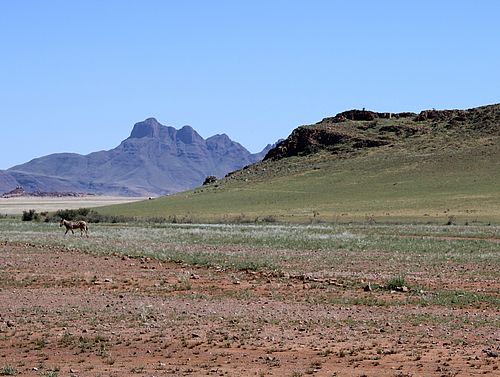
D707 Namibia: The Political Economy of the Middle of Nowhere

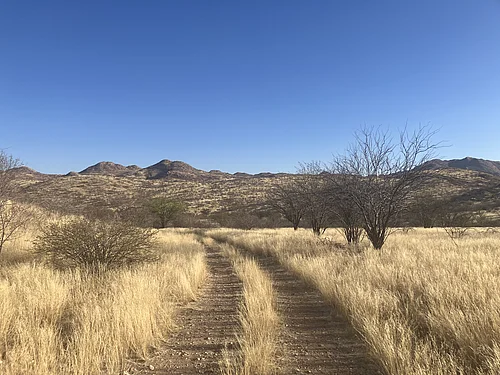
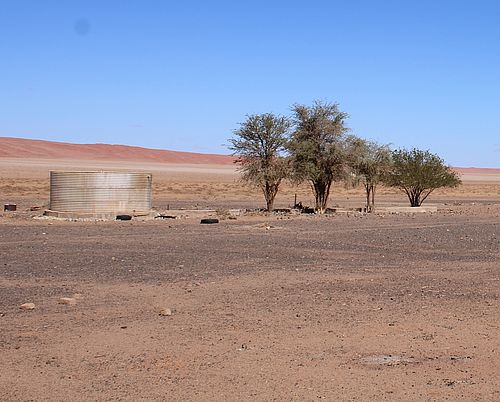
In southwestern Namibia, a small gravel road cuts deep into the Namib Desert, connecting about fifteen massive commercial farm parcels with the outside world. These farms were surveyed after the Second World War, as a strategy by the apartheid government to resettle white veterans. New, cutting-edge borehole technology opened up groundwater deep in the Namib, and the booming karakul sheep industry enabled these desert farmers to thrive. Wild game species were culled to make way for sheep, and the lambskin pelts produced on these farms found their way to luxury furriers in the Global North. The specific political economy of rural apartheid in southern Namibia enabled vast profits to be reaped, despite geographical distance from centres of power. With the decline of apartheid, many white farmers fled, unwilling to live under a black government; but this did not change the potential for profits.

Today, land along this road is primarily owned by multinational tourism companies and their local partners. Their eco-tourism ventures involve ultra-high-wealth clientele, flying in on private aeroplanes to holiday in the middle of nowhere. They frame their luxury lodges and hotels as an means of repairing the purported dereliction caused by generations of stock farming. Yet, they deliberately destroy all farm infrastructure on the properties, rendering them useless for post-apartheid land reform programmes. This project explores the means whereby ‘the middle of nowhere’ is integrated into global capitalist markets, and how such processes are reclothed—but not structurally transformed—in an era of climate change.

Farm Keerweder 2022
Lead: Sophie Zimdars

Conserving Colonialism? - International Funding of Nature Conservation and Land Distribution in Southern Namibia

This PhD project examines critically the power structures of foreign aid in Namibian conservation areas. Drawing on interviews, document analysis and archival research, the project traces monetary flows in the conservation landscape from the 1980s to the present day, examining their connection to changes in land ownership and use in the area.

The study area is the state-owned Namib-Naukluft National Park and surrounding private conservation areas in southern Namibia. Colonial paintings, conservation management plans, and donor websites portray this area as a pristine semi-arid desert, but this obscures the violent history of the conservation landscape. Under German and South African rule, African people were displaced from their land for the sake of white settlements and game reserves. It therefore requires a critical awareness for these continuities of foreign donors' involvement in Namibian landscapes.

After independence, a large share of private land remained in the hands of the small number of landowners, who turned their land into private conservation reserves. For the Namibian government nature conservation has become an important political strategy for growth in the tourism sector and for rural development. The role of international conservation funding must therefore be understood in relation to capitalist accumulation and elite interests.

Sugar Cane Mauritius
Lead: Bernard C. Moore and Luregn Lenggenhager

Sugar Cane and Smart Cities: Transformations in Agriculture, Climate, and Elite Land Tenure in Mauritius

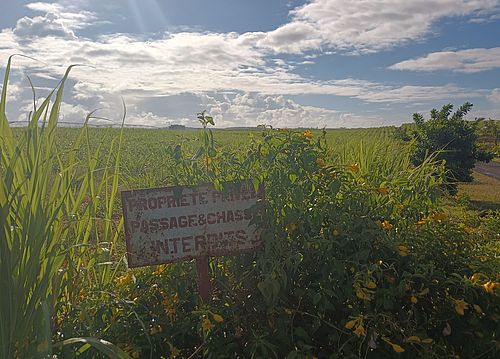
The small Indian Ocean nation of Mauritius was once one of the largest sugar producers on Earth. Yet, since the nation's independence in 1968, production has fallen from 5.1 million metric tons to 2.1 million today. The area under cultivation has declined dramatically as well, from nearly 80,000 hectares of cane fields to just 34,000 today. In many ways, Mauritius is emblematic of many of the 'sugar islands' of the global south, like Jamaica or Trinidad, which were immensely profitable sources of sweetness during the age of imperialism and slavery, and yet have been left in the dust in the age of the 'green revolution', agricultural intensification, and sugar-beet production.

This project explores how, in the context of changing weather patterns and changing economic conditions since the Second World War, land tenure and land use in Mauritius have transformed. Today, large amounts of sugar cane hectarage are bulldozed and made way for 'smart cities' and 'integrated resort schemes', in the hope that the subdivision and sale of freehold land will increase FDI. At the same time, many Mauritians wonder whether this is the best way forward in an age of climatic and economic uncertainty. Though Mauritius may be a small island nation, this project reveals the ways in which these debates are emblematic of many ongoing global questions today.

Schuttkegel in Schwarzsee
Lead: Luregn Lenggenhager

Histories of Uninhabitability in the Swiss Mountains

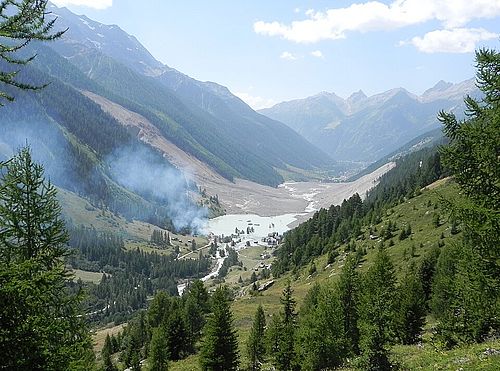
This project explores the history of uninhabitability as a recurring argument in debates about the Swiss Alps. Since the first half of the twentieth century, remote valleys and mountain villages have repeatedly been discussed as places that might have to be given up. These arguments emerged in different forms and for different reasons: some valleys were described as no longer economically viable, others as too dangerous to live in because of natural disasters, and others again as landscapes that would be better used for nature conservation than for farming and settlement. The project follows these debates from recurring twentieth-century proposals to abandon mountain settlements, including the influential “Alpine Fallow Lands” (Alpine Brache) debate around the turn of the millennium, to debates about landslides, melting permafrost, extreme weather, and the future of mountain settlements in a changing climate.

At the centre of the project are questions around how and by whom certain areas come to be imagined as no longer valuable or inhabitable. It asks who made these arguments, how they were justified, and what they meant for the people living in valleys discussed as too dangerous, too expensive or too natural to be inhabited. We further examine how older ideas about abandonment are returning in the context of climate change, as mountain villages and access roads are increasingly affected by natural disasters and extreme weather conditions. By tracing these debates historically, the project shows that uninhabitability is not a material condition but also a political and cultural argument about the future of mountain life.

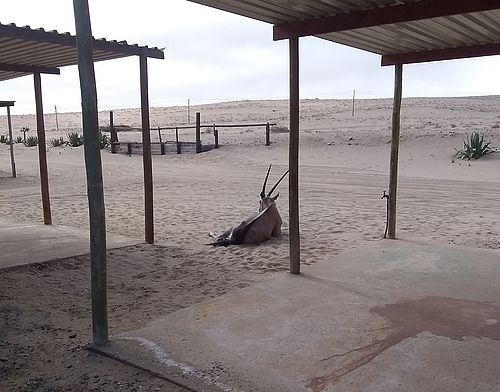
Gemsbock in Hotel
Lead: Joëlle S. Martz

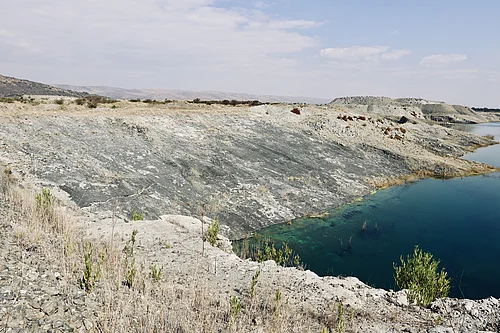
Mining, Tourism and the Space in Between

Transitioning landscapes from mining operations to tourism attractions has globally emerged as a preferred response to the dereliction left by extractive industries. As a way to continue capitalisation and community livelihood on landscapes no longer suitable for natural resource extraction, such transitions tend to enable pathways to pass on private liabilities to state governance legally. In Southern Namibia, where diamond-bearing soils are approaching depletion, the former company town of Oranjemund faces these transitions acutely, and while tourism emerges as an anticipated successor to the mining industry, the question of what kind of tourism — and for whose benefit — becomes urgent.

Namibia's tourism infrastructure carries the imprint of its colonial past, and the narratives it produces about landscape, memory and belonging remain uneven. As literature suggests, the reframing of extraction sites as mining heritage offers both potential towards alternative tourism narratives and security of community livelihood beyond mine closure. Yet that same reframing risks reproducing harmful colonial logics as the imagination and development of these landscapes remain in elite hands. This MA project accompanies the process of transition from mining to tourism in Oranjemund and focuses on the symbolic and material power of dereliction in shaping post-mining landscapes. It asks what continues, what emerges, and what is lost as the violated landscapes around a mining town develop into tourism economies.


Publications

Becker, F.K., Nghitevelekwa, R.V. and Lenggenhager, L. (2026) “Conservation and land in Namibia: A palimpsestic reading of an underexplored nexus”, Namibian Journal of Environment, 12, p. i-iv. Available at: 10.64640/6y3k92jw.   

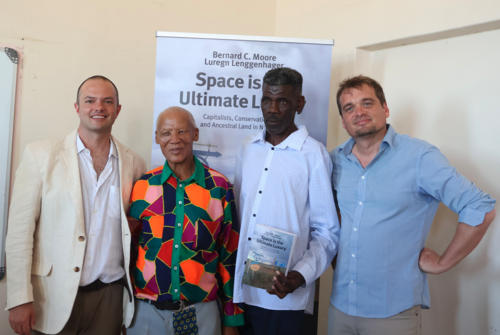
Moore, B.C. and Lenggenhager, L. (2025) Space is the Ultimate Luxury: Capitalists, Conservationists, and Ancestral Land in Namibia. Leiden: BRILL (African Social Studies Series). Available at: 10.1163/9789004712454


The Project Team

To top