
Africa Forum 2017
Moving with Africa: Opportunities for Business and Development
University of Basel, 28 June 2017
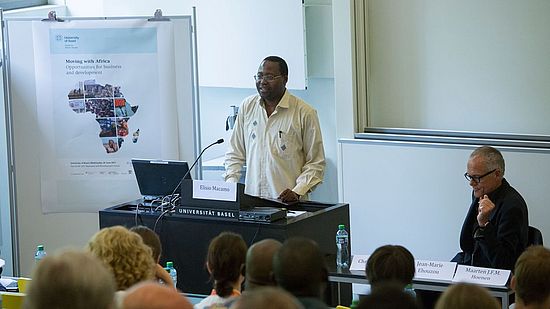
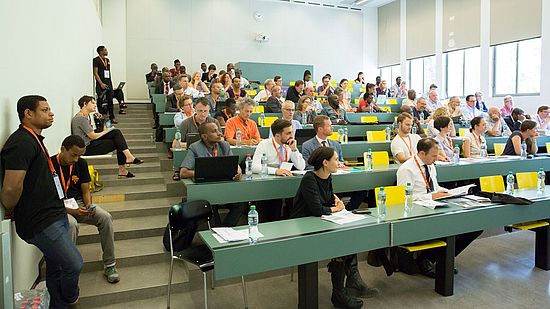
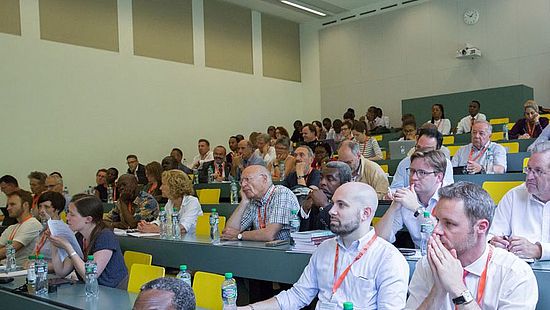
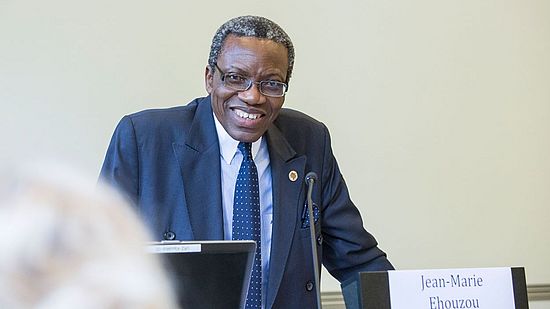
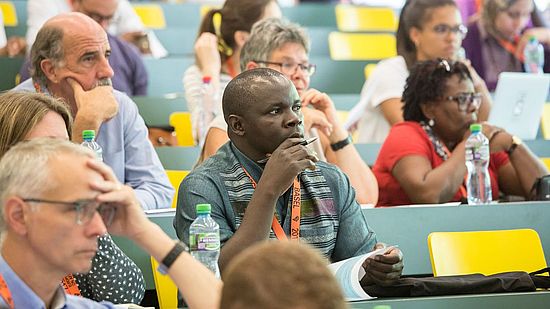
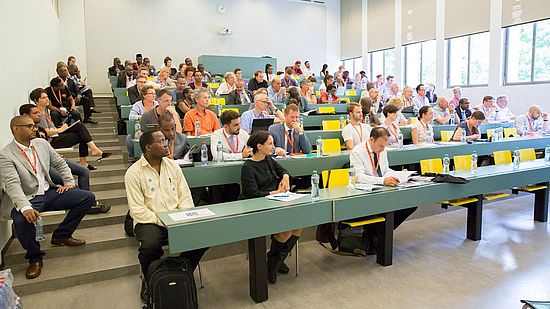
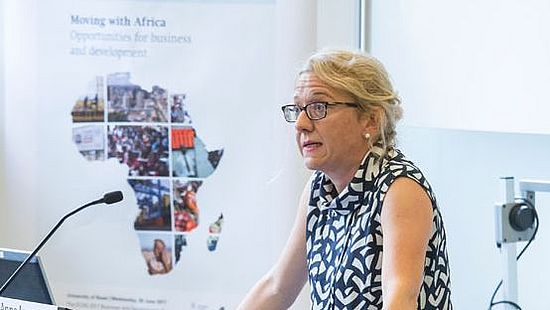
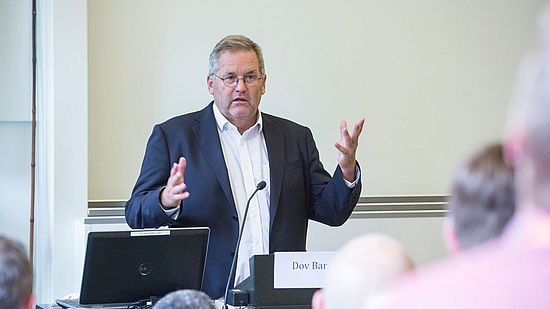
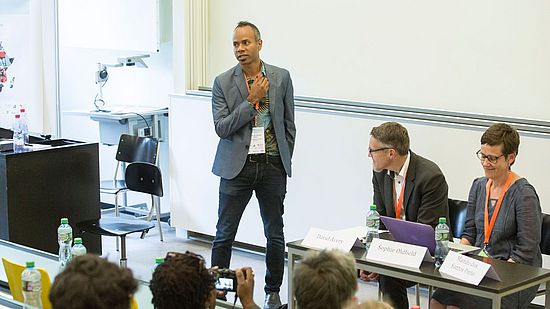
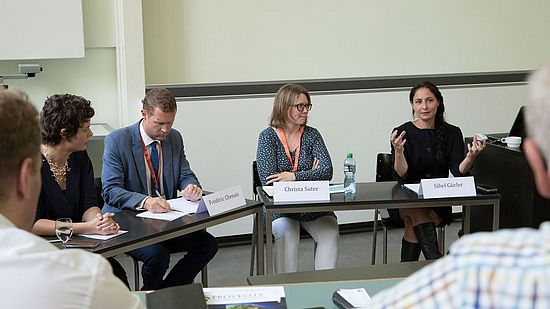


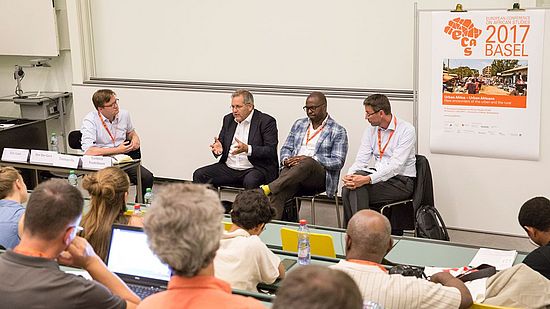
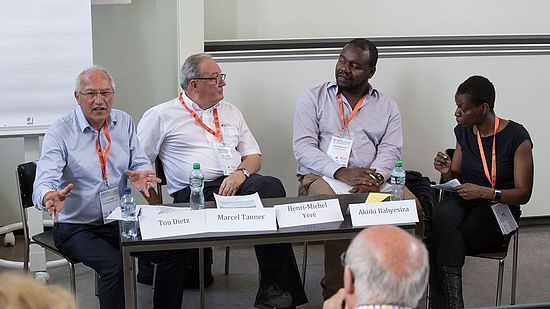
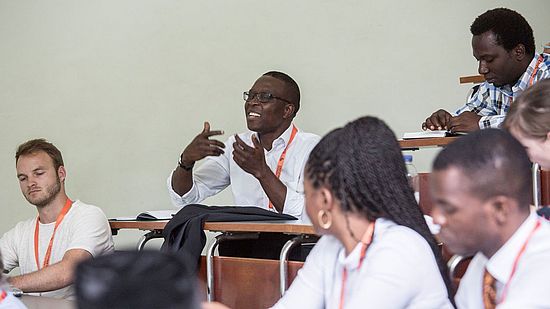
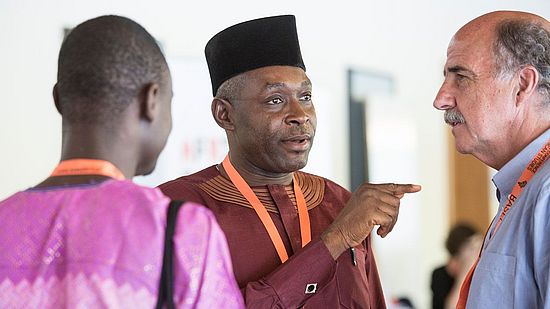
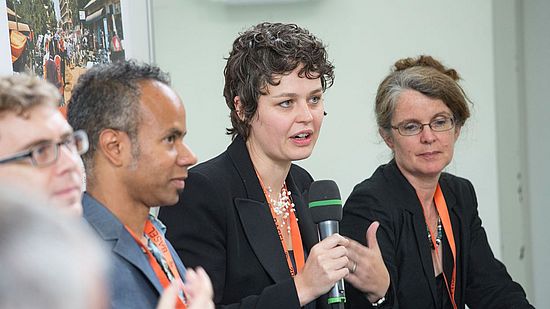
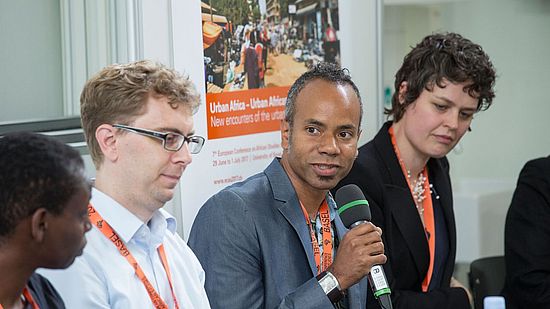
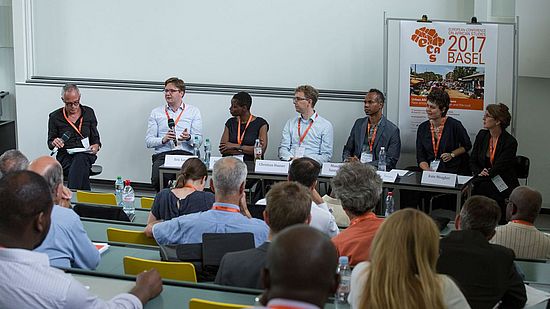
With the Business and Development Forum we offered a platform for the exchange between academics and decision makers in business, government and development cooperation. Participants discussed opportunities and challenges for international business arising from Swiss-African relations as well as the expectations by African societies and stake-holders towards these relations. Parallel panel sessions payed special attention to business and society, technology and infrastructure as well as capacity and knowledge.
The forum took place in the run-up of the 7th European Conference on African Studies, which was hosted by the University of Basel from 29 June to 1 July 2017. The fact that the ZASB together with the Swiss Society for African Studies were entrusted with the organization of Europe’s most important convention in the field speaks for the position of Basel and Switzerland as international hotspots for research on, in, with and for Africa. This position is based on Switzerland’s and Basel’s long-term and lively ties to various regions, states and institutions in Africa – in the academic realm, but also in the areas of business as well as development cooperation. It is one of the ZASB’ foremost aims to valorize and critically reflect these ties in order to make our academic engagement with Africa relevant and accessible beyond academia. The Business and Development Forum was a means to this end.
1:30 pm | KeynotesWelcome Introduction: Movers and breakers +++ CHANGE +++ Keynote: Africa: between hopes and realities Keynote: When perception meets reality |
2:30 pm | Break |
2:50 pm
| Breakaway panel sessionsA1: Corporate responsibility and human rights |
3:40 pm | Break |
4:00 pm
| Breakaway panel sessionsA2: Accountability and anti-corruption measures B2: Digital natives and industry 4.0 C2: Higher education, private sector and socio-economic development |
4:50 pm | Break |
5:10 pm | Wrap-up and final discussion |
5:45 pm | Reception |
7:00 pm | Carl Schlettwein Lecture:Digitalisation and the field of African Studies |
Breakaway panel sessions
Business and society
A1: Corporate responsibility and human rights
Ideally, business supports socially, environmentally and economically sustainable development. While many entrepreneurs and investors contribute to this goal, respective incentives and regulations are often either not in place or ineffective. This panel will focus on the ways in which entrepreneurs and investors can contribute to the fostering of human security, the promotion of human rights – and the challenges they face in living up to these expectations. The discussion will address both structural and intercultural incentives and constraints. |
A2: Accountability and anti-corruption measures
Corruption and bribery are seen as major concerns both for socio-economic development and for doing business in an African context. This panel will tackle these issues by taking into account different perspectives. It will ask what corruption means for the societies concerned, what role rules, norms and interests play, and what individuals and organizations can do in order to prevent themselves from being involved in illegal and illegitimate activities. |
Technology and infrastructure
B1: Sustainable urbanisms and green technology
In the context of Africa’s fast urbanization opportunities and challenges arise for both business and socio-economic development. The transportation of goods and people, the provision of power and water, as well as sanitation and waste management require innovative and sustainable solutions for the sprawling urban centres. This panel discusses the ways in which investors and entrepreneurs, authorities and not least the urban residents contribute to the development and implementation of such solutions. |
B2: Digital natives and industry 4.0
This panel addresses current trends in the booming and dynamic ICT sector in various African sub-regions. It assesses the impact of technological innovation particularly in the field of digitalization and mobile communication on socio-economic development and explores the potential for investment and collaboration. |
Capacity and knowledge
C1: Talents, employees, labor markets
In this panel, we will discuss the role of human resources for the relation between entrepreneurship and society. The issues range from the search for talents and the employers’ demands towards the labor market to the expectations of local employees towards their employers and the socio-economic impact of education and employment policies in the context of high unemployment rates among young people. |
C2: Higher education, private sector and socio-economic development
Development policies ascribe higher education a major role in socio-economic development and scientific research should play a key role for the achieving the goals of the UN’s Agenda 2030. But knowledge production and capacity building are priorities not only for African governments and foreign donors; they are also crucial resources for local and international business. This panel will discuss forms of collaborations in the production of knowledge in, on and for Africa, taking into account the potential contributions and needs of both private enterprise and socio-economic development. |